Community College News

Stay abreast of all the news and reports impacting community colleges. This section covers the latest news stories, from campus protests to Wal-Mart partnerships. Read community college reactions to the latest State of the Union address, identify schools receiving big donations, and analyze the latest laws impacting community colleges and their students.

View the most popular articles in Community College News:

North Carolina Community Colleges: Pioneering Increased Enrollment and Early Graduation Rates

Updated
|
North Carolina Community Colleges: Pioneering Increased Enrollment and Early Graduation Rates
Learn about how North Carolina's community colleges have created innovative programs that not only increase student enrollment, but give high school students an opportunity to attend courses on campus tuition-free.
dramatic savings in tuition costs recession-proof careers graduation rates

High School Students in North Carolina's Community Colleges

According to “Diverse Issues in Higher Education,” students in select areas of North Carolina, such as in the city of Sanford, may be eligible to earn free college credits while still in high school.

Created in 2007, eligible students can apply for the “Lee Early College” program (LEC). By engaging in LEC, high school students attend courses at the nearby Central Carolina Community College (CCCC) campus. Inspired in part by former Governor Easley’s educational agenda, “It’s part of Gov. Mike Easley’s Learn and Earn Early College High School educational initiative in which students graduate in five years with both a diploma and an associate degree, with all credits transferable if they choose to enroll at a four-year institution as a junior post-graduation.”

This video describes the Lee Early College program.

In the first year of its inception, 73 students were able to take advantage of completely free college courses while earning valuable credits. Growing in popularity, the LEC participation numbers nearly doubled after just one year, resulting in 156 LEC students by 2008. Partially funded by a $1.5 million grant from the state of North Carolina (with private donations additionally provided by the Bill and Melinda Gates Foundation), eligible LEC students will be able to engage in this opportunity until 2011, at which


. . .read more

Community Colleges Fight for the Right to Grant Four-Year Degrees

Updated
|
Community Colleges Fight for the Right to Grant Four-Year Degrees
Does your state allow community colleges to grant bachelor's degree? Learn about both sides of the debate and how it impacts community college students.

Students no longer need to attend a four-year university to obtain a bachelor's degree. More community colleges nationwide have "graduated" from issuing associate's to bachelor's degrees. Community college courses cost a mere fraction of public or private university options - which means that students who earn bachelor's degrees at their community college can save tens of thousands of dollars while pursuing their educational goals.

Unfortunately, not everyone in academia supports community colleges issuing bachelor's degrees. Critics are concerned that universities will experience a drop in student enrollment, which will ultimately lead to a loss of revenues. The debate is becoming increasingly heated, with educational leaders and community members divided on allowing community colleges to issue bachelor's degrees.

The Growing Fight for Four-Year Degrees

Community colleges in a dozen states nationwide have already gained the right to issue bachelor's degrees, and more campuses are looking for the same privileges.

For example, as News Day reveals, Michigan is fighting loudly against state restrictions that prevent community colleges from offering 4-year degrees. As Michigan's state representative John Walsh asserts, community colleges could offer improved job training opportunities for the future of Michigan's auto workers if local campuses could issue 4-year degrees. Subsequently, Walsh introduced a new bill that would permit community colleges to offer 4-year degrees in nursing, cement technology, and culinary arts. If the bill is approved, the large number of unemployed workers in the state could have opportunities to

. . .read more

How Community Colleges are Cutting Costs with New Resources

Updated
|
How Community Colleges are Cutting Costs with New Resources
Learn about how community colleges across the nation are reducing their campus costs by incorporating eco-friendly and green technologies.

To mitigate the soaring costs of a college education, schools are striving to dramatically cut back on expenses in order to provide more affordable tuition for students. Fortunately, although educational costs are on the rise, new technologies are serving to fight back the expenses!

With an array of new tools and resources that can help lower a school’s energy and maintenance costs, community colleges across the country are embracing newer and revolutionary methods on their campuses.

How Green Technologies are Cutting the Costs of Community College

One of the fundamental ways in which schools are striving to save dollars on the costs of community college operations is through the implementation of solar energy. Specifically, as evident at North Shore Community College, located in Lynn, Massachusetts, leaders are installing new solar panels on the roof of one of its prominent campus building. With this innovative installation, these solar panels will help produce 3 percent of the school’s entire energy needs. Ultimately, this energy production will equate to approximately 74,726 kW each year! With both federal and state-funded support, North Shore is optimistic that their solar panels will help to cut costs and ecological wastes for all students on campus.

In addition to specifically implementing solar energy plans, many schools are striving to create a more holistic approach to going green to save money. For example, according to Green California Community College Summit, leaders are creating informative programs and seminars to teach community college students and faculty

. . .read more

Nature-Based Studies and Environmental Clubs

Updated
|
Nature-Based Studies and Environmental Clubs
Explore how community colleges are pioneering the “green” trend and learn about new environmental protection clubs and exciting nature classes.

As the demand to “go green” seems to be growing in relevance in recent years, many community college students are implementing actions to promote environmental change and progress by creating clubs and organizations to improve their local environments. Adding to this, community college leaders have also created programs and courses to help educate students on the importance of nature-based learning through environmental studies.

Lewis and Clark Community College

Students at Lewis and Clark Community College have easy and convenient access to learning more about environmentally-friendly initiatives and actions, as LCCC has established a “Green Living Club” to teach students and members about the importance of living an eco-responsible lifestyle. As LCCC’s “Green Living Club” asserts, “The Green Living Club is dedicated to the education and promotion of a green, eco-friendly lifestyle on and off-campus. There are so many ways that individuals can help protect the planet.”

The club strives to inform students and local residents about significant and current environmental issues, while the club simultaneously strives to encourage people to live greener lifestyles by taking a hands-on part in improving the green-focus of LCCC’s campus.

Suffolk Community College

In addition to an array of programs and courses, Suffolk Community College maintains its ecological focus by providing students and residents with a Nature Reserve. With miles of trails and preserve areas, individuals can explore the Nature Reserve

. . .read more

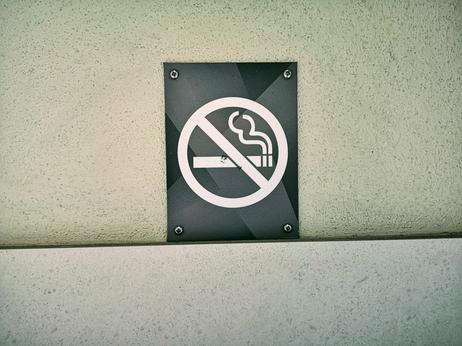
Living Smoke Free: Banning Tobacco

Updated
|
Living Smoke Free: Banning Tobacco
Learn about the growing trend among community colleges to ban tobacco use on campus.

As a societal approach to improving health conditions in public settings, many offices, community centers, and restaurants have initiated tobacco and smoking bans on their properties. While public schools, such as elementary and high schools, have banned tobacco products on their educational campuses for years, community colleges across the country are now beginning to follow this health-driven trend.

Banning Tobacco on Community College Campuses

The Growing Trend

Institutions, businesses, and other settings possess the legal right to ban smoking and tobacco use on property grounds because private properties can be governed by owners/managers/leaders. As a result, those who own personal property often have the supreme authority over the rules and regulations of their grounds and boundaries.

On the other hand, community colleges had to earn their right to ban tobacco in 2006, as community campuses are not necessarily “privately” owned properties. In 2006, Katherine McDonald of the Chatham Journal explains, “The General Assembly adopted legislation exempting community colleges from a law requiring public institutions to set aside areas for tobacco use.”

According to McDonald’s investigations, community colleges that have adopted smoke-free and tobacco-free policies include schools such as Asheville-Buncombe Technical, Cleveland, Guilford Technical, Haywood, Pitt, Roanoke-Chowan, Stanly, Wake Technical, and Wilkes Community College.

This video describes the Truth Initiative, which helps community colleges and Historically Black Colleges and Universities (HBCUs) bring tobacco-free policies to the campuses that serve young adults from minority and low-income communities.

. . .read more

Recent Articles

Test Article, Image and Content
Test Test Test Test Test Test Test Test Test Test Test Test Test Test Test Test Test Test Test Test Test Test Test Test Test Test Test Test Test Test Test Test Test Test Test Test Test Test Test Test Test Test Test Test Test Test Test Test Test Test Test Test Test Test Test Test Test Test Test Test Test Test Test Test Test Test Test Test Test Test Test Test Test Test Test Test Test Test Test Test Test Test Test Test Test Test Test Test Test Test Test Test Test Test Test Test Test Test Test Test Test Test Test Test Test Test Test Test Test Test Test Test Test Test Test Test Test Test Test Test Test Test Test Test Test Test Test Test Test Test Test Test Test Test Test Test Test Test Test Test Test Test Test Test Test Test Test Test Test Test Test Test Test Test Test Test Test Test Test Test Test Test Test Test Test Test Test Test Test Test Test Test Test Test Test Test Test Test Test Test Test Test Test Test
Faith Formation Integrated Across Subject Areas
Explore faith formation integrated across subject areas and its impact on curriculum, student outcomes, and community colleges.
Parish-Based Governance Models in Catholic Schools
Explore parish-based governance models in Catholic schools and their impact on leadership, funding, and community colleges.