Updated
|
Top Challenges for Non-Traditional Students in Community College
Explore the most pressing challenges non-traditional students face in community colleges, from financial strain to technology gaps, with updated insights for 2026.

Introduction

Non-traditional students now represent a substantial portion of the community college population, with the average age around 27 and two-thirds of students attending part-time according to recent national data. These learners often balance work, family, caregiving, and economic responsibilities while pursuing credentials that can improve their career prospects and earnings potential.

In 2026, community colleges remain a vital pathway to postsecondary success. Tuition remains relatively affordable compared with four-year institutions, with modest increases in recent years, making these institutions attractive to learners of all ages concerned about cost and debt.

Despite these advantages, non-traditional learners encounter persistent challenges that can affect their ability to enroll, persist, and complete programs. This article updates an earlier review for the current academic climate, linking key barriers to timely admissions, financial planning, student services, and academic trends that families and advisors should understand.

Financial Constraints and Cost Management

Financial stress is near the top of the challenge list for non-traditional students. While community college tuition remains lower than four-year alternatives, total annual costs including books, transportation, supplies, and living expenses can add up quickly and exceed tuition alone.

Many non-traditional students are financially independent, supporting families or covering household bills while enrolled. The complexity of balancing tuition with everyday obligations frequently leads students to enroll part-time or pause studies entirely. In some policy proposals debated at the federal level, changes to eligibility criteria for Pell Grants could make it harder for part-time students to access

. . .read more

How to Transfer to a Four-Year University Without Losing Credits

Updated
|
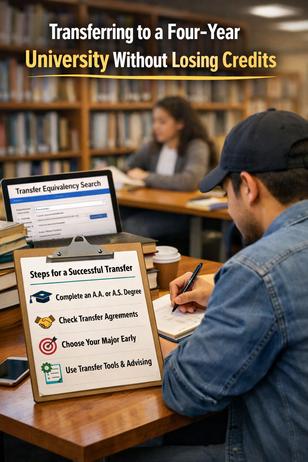
How to Transfer to a Four-Year University Without Losing Credits
Learn how to transfer to a four-year university without losing credits in 2026, including agreements, planning tips, and expert guidance.

How to Transfer to a Four-Year University Without Losing Credits in 2026

Knowing how to transfer to a four-year university without losing credits is one of the most important concerns for today’s college students and families. In 2026, more than one third of bachelor’s degree recipients will have attended at least two institutions. Credit loss during transfer remains common, costly, and frustrating.

Understanding how to transfer to a four-year university without losing credits can save students thousands of dollars and months, sometimes years, of additional coursework. This guide explains how to transfer to a four-year university without losing credits using current policies, updated tools, and proven strategies that work in today’s higher education landscape.

Why Credit Loss Happens During College Transfers

Before learning how to transfer to a four-year university without losing credits, it helps to understand why credits are often lost. Colleges retain authority over which courses count toward their degree programs. Even accredited courses may be accepted only as electives or not at all.

Common reasons credit loss occurs include:

  • Course content that does not match major requirements

  • Credits earned at nationally accredited rather than regionally accredited institutions

  • Lack of articulation agreements between institutions

  • Changing majors after transfer

  • Outdated or incomplete advising

Understanding these risks is essential when planning how to transfer to

. . .read more

First-Generation Student Guide to Community College Success

Updated
|
First-Generation Student Guide to Community College Success
A first-generation student guide to navigating your first semester at community college, with academic, financial, and campus life strategies.

First-Generation Student Guide: Navigating Your First Semester at Community College

Starting college is a major milestone. For first-generation students, it can feel especially complex. This first-generation student guide is designed to help students and families understand what to expect during the first semester at community college, how to prepare effectively, and how to use available support systems with confidence.

A first-generation student guide matters because students whose parents did not complete a four-year degree often enter college without informal knowledge about higher education systems. Community colleges serve nearly half of all first-generation undergraduates in the United States, according to recent enrollment trends, making this first-generation student guide particularly relevant in 2026.

This first-generation student guide focuses on practical steps, academic habits, financial planning, and campus engagement strategies that support a strong start.

Understanding What It Means to Be a First-Generation College Student

A first-generation college student is typically defined as a student whose parents or guardians did not earn a bachelor’s degree. This first-generation student guide emphasizes that this status is not a disadvantage. Instead, it reflects resilience, motivation, and the ability to navigate new systems successfully.

Community colleges are uniquely positioned to support first-generation students. Smaller class sizes, flexible schedules, and wraparound services make them an ideal starting point. This first-generation student guide highlights how to take advantage of those features from the first week of classes.

Preparing Before the Semester Begins

Early preparation sets the tone

. . .read more

Most In-Demand Community College Majors for 2025–26

Updated
|
Most In-Demand Community College Majors for 2025–26
Explore the most in-demand community college majors for 2025–26 workforce needs, aligned with hiring trends, wages, and transfer pathways.

Most In-Demand Community College Majors for 2025–26 Workforce Needs

Community colleges sit at the center of America’s workforce pipeline. As industries adapt to automation, healthcare demand, climate priorities, and digital transformation, the most in-demand community college majors are shifting in clear and measurable ways. For the 2025–26 academic year, students and families are increasingly focused on programs that offer strong job placement, stackable credentials, and pathways to bachelor’s degrees.

This guide examines the most in-demand community college majors for 2025–26 workforce needs, drawing on labor projections, employer hiring trends, and enrollment data. It is designed to help students, parents, and educators understand where opportunity is strongest and how community colleges are responding.

Why In-Demand Community College Majors Matter More Than Ever

Rising tuition costs and uncertain labor markets have made return on investment a central concern. The most in-demand community college majors provide a practical solution. These programs typically combine lower tuition, shorter completion timelines, and strong alignment with regional workforce needs.

According to the U.S. Bureau of Labor Statistics, many of the fastest-growing occupations over the next decade require postsecondary credentials but not a four-year degree, making community college pathways especially relevant for 2025–26 workforce needs. Community colleges are also expanding employer partnerships and work-based learning, further strengthening the value of these majors.

Key Criteria Used to Identify the Most In-Demand Community College Majors

To determine the most in-demand community college majors for 2025–26 workforce needs, several factors

. . .read more

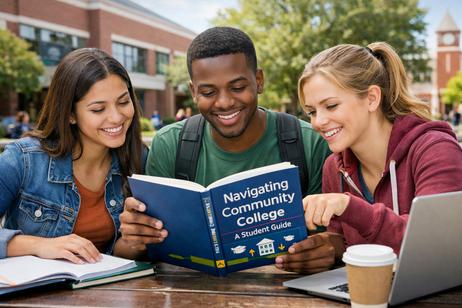
New Guidebook Helps Students Navigate Community College

Updated
|
New Guidebook Helps Students Navigate Community College
A new guidebook offers practical strategies to help students and families succeed in community college, from admissions to transfer and career planning.

New Guidebook Helps Students Successfully Navigate Community College

Community college remains one of the most important and complex entry points to higher education in the United States. Nearly half of all undergraduates begin their academic journey at a community college, attracted by affordability, flexible scheduling, and diverse academic pathways. Yet for many students and families, community college can feel confusing and fragmented, with unclear expectations around advising, transfer, and career outcomes.

A newly released guidebook aims to address those challenges head-on. Designed for students, parents, educators, and policymakers, the guidebook provides a clear roadmap for navigating community college from enrollment through completion. It reflects current realities in community college education in 2025, incorporating updated policies, research, and real-world examples that reflect how community college students actually learn and progress today.

Why Community College Navigation Matters More Than Ever

Community college students today are more diverse than at any point in history. According to recent U.S. Department of Education reporting, community college enrollment includes a higher share of first-generation students, working adults, student parents, and learners returning after time away from school. Many community college students attend part time, balance employment, or rely on public benefits while enrolled.

At the same time, community college systems have become more complex. Students must choose among academic transfer programs, career and technical education pathways, short-term credentials, and dual enrollment options. Without clear guidance, students can lose time, financial aid eligibility, or momentum.

The guidebook responds

. . .read more

Recent Articles

Test Article, Image and Content
Test Test Test Test Test Test Test Test Test Test Test Test Test Test Test Test Test Test Test Test Test Test Test Test Test Test Test Test Test Test Test Test Test Test Test Test Test Test Test Test Test Test Test Test Test Test Test Test Test Test Test Test Test Test Test Test Test Test Test Test Test Test Test Test Test Test Test Test Test Test Test Test Test Test Test Test Test Test Test Test Test Test Test Test Test Test Test Test Test Test Test Test Test Test Test Test Test Test Test Test Test Test Test Test Test Test Test Test Test Test Test Test Test Test Test Test Test Test Test Test Test Test Test Test Test Test Test Test Test Test Test Test Test Test Test Test Test Test Test Test Test Test Test Test Test Test Test Test Test Test Test Test Test Test Test Test Test Test Test Test Test Test Test Test Test Test Test Test Test Test Test Test Test Test Test Test Test Test Test Test Test Test Test Test
Faith Formation Integrated Across Subject Areas
Explore faith formation integrated across subject areas and its impact on curriculum, student outcomes, and community colleges.
Parish-Based Governance Models in Catholic Schools
Explore parish-based governance models in Catholic schools and their impact on leadership, funding, and community colleges.