Improving Learning

Get helpful tips and expert advice on boosting your GPA. This section will provide valuable tips on studying, mentor programs and how to avoid academic probation. Examine the latest trends in student motivation techniques, take a good look at online learning, and find resources to guide you on the path to success.

View the most popular articles in Improving Learning:

Community College Counseling: Academic and Personal Support

Updated
|
Community College Counseling: Academic and Personal Support
Your community college is an excellent resource for support; learn about the academic and emotional support available to you on campus.

As a rising number of students enroll in community college programs, the support of a community college counselor is becoming increasingly vital. As researcher Preston Pulliams from the ERIC Clearinghouse on Counseling and Personnel Services supports, “The emerging role of community college counseling is actually an expansion of traditional roles: Community college counselors are becoming learning agents, student developers, and resource managers.”

Traditionally, community college counselors focused on “providing personal counseling, vocational guidance, and social support for the traditional community college student.” However, as student enrollment grew, and the student populations become more academically, socially, and financially diverse, counselors have shifted their focus: “To meet the needs of these new students, community colleges are reinstating testing and placement, dismissal and probation policies, general education requirements, and select admissions programs.”

Community Counselors and Systems of Support

Learning Aids

As Pulliams further explains, “The emerging role of counseling involves helping students to complete their academic objectives […] Counselors must perform the roles of student developers and learning agents.” Adding to this, “counselors must communicate to students the importance of skill-building and other academic requirements and help them understand the value of their academic endeavors.”

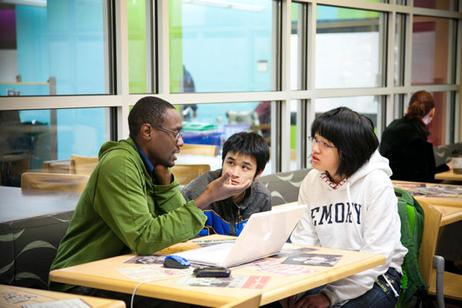
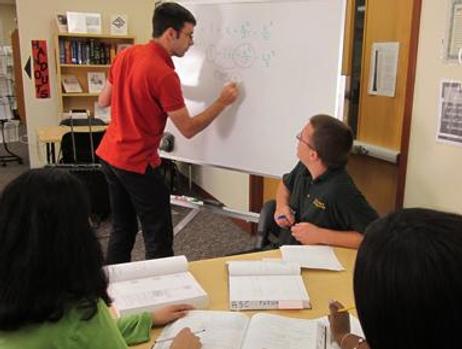
Counselors, as learning aids, can help serve students of the community college as academic supporters; counselors have access to all of the school’s resources and tools to help students find specific and interpersonal support and assistance. For example, if a student is struggling with specific math concepts, a counselor can guide
. . .read more

Support for ESL Students in Community College

Updated
|
Support for ESL Students in Community College
Learn about the support programs available for ESL students in community college.

As community colleges provide students of diverse backgrounds with access to courses, instruction, and training venues, schools are now implementing increased support for students whose primary and native language is not English. Students who are in the process of learning English are referred as English as a Second Language (ESL) students, and community colleges are revising their programs to extend and improve academic and campus support.

Community College ESL Courses

Many community colleges offer ESL students a variety of specialized language courses. Typically, students will take a proficiency test and will then enroll in the appropriate ESL / language course based on individual skills and abilities. As Kenneth Beare in “Setting ESL Class Objectives” explains, taking “language acquisition needs into consideration when planning a class or individual instruction is crucial for a successful learning experience […] When a student understands his/her reasons for learning English well, he can then better plan his learning strategy. In the classroom, he/she can help the teacher identify needs and desires.”

This video explains what ESL is.

Community College ESL Resources

In addition to specialized courses, most community colleges also provide students with personalized support systems, such as tutoring offices and academic advisors. Students can take advantage of ESL resources by visiting the community college campus resource center, or by meeting with an academic advisor for further guidance and information.

Examining Community College ESL Programs

Mesa

. . .read more

Unlocking Academic Potential: Tutoring Resources for Community College Students

Updated
|
Unlocking Academic Potential: Tutoring Resources for Community College Students
This article explores the various tutoring and academic assistance options available to community college students. It highlights resource centers, online tutoring platforms, and developmental courses designed to support students in core subjects and improve their overall academic performance.

As students transition to the demands of community college courses, many quickly realize they need added academic support. While instructors can assist during office hours, community colleges also offer resource centers and even some college courses to help provide students with added assistance.

Community College Academic Resource Centers

With over five campuses across Iowa, Iowa Lakes Community College provides students with a resource center at each campus location. At the resource centers, students can specifically seek help for academic issues; for example, “Students may request individual tutoring, help with proofreading papers, and/or assistance in developing good study skills.” As many new community college students struggle with essays, homework assignments, or even with issues of organization and memorization, the academic resources at community college campuses can be avenues of beneficial support.

Added to the resources of academic assistance, community college students can also find information about generalized entry exams or class placement exams. Furthermore, Iowa Lakes Community College requires “each incoming freshman be assessed. Assessment results help guide students into appropriate academic courses. Students are assessed using ACT, ASSET, or COMPASS in reading, writing, and mathematics.” To become prepared and aware of the testing information, students can utilize the campus-wide resource centers to find out sample test questions, testing dates, and testing strategies.

In Fremont, Ohio, Terra Community College is another institution gaining recognition for its outstanding student outreach programs. TCC has five specific academic outreach organizations to help students excel in various specific

. . .read more

Writing Assistance for Community College Students

Updated
|
Writing Assistance for Community College Students
Learn how to get essay and writing skills assistance in community college.

According to research conducted by ACT News, the country’s largest provider of assessments for students transitioning from high school to college, strong writing skills are among the most important skills needed to promote post-secondary success.

Based on reports from over 6,500 college and high school teachers, some of the most imperative writing skills include students’ ability to convey information in a written, organized, and logical manner, while utilizing correct grammar and sentence structure. As many community college students often struggle with the increased demands of collegiate writing requirements, many community colleges offer resources that can provide both assistance and support for increased writing improvement.

Writing Support for Community College Students

Seeking Assistance Early On

According to research conducted by Linda Jacobson of the Community College Review, students can aim to improve their collegiate writing skills by foremost focusing on their core issues and struggles: “To improve basic skills, developmental writing students need a solid understanding of the basic structure or fundamentals of the subject. Most developmental writing students realize that they have problems in writing well but are not able to identify a specific problem area.”

Oftentimes students may feel inhibited in their ability to write cohesively with clear organization, or may struggle to even start an essay or writing assignment. As such, the Jacobson suggests that students should meet with instructors individually at the first sign of any problems or concerns.

The Benefits of Individual Conferences

In meeting with instructors individually, students can understand what

. . .read more

Establishing Good Relationships with Instructors

Updated
|
Establishing Good Relationships with Instructors
Learn how to establish good relationships with community college instructors, and how they can be helpful for your academics.

As class sizes across the country continue to rise, many community college students struggle to connect with instructors. Students must strive to build positive working relationships with instructors to combat some of the potential issues of over-sized classes or to even further benefit from smaller classes.

Building positive student-instructor relationships allows students to gain more personal assistance, work through the course material more effectively, and ultimately perform better.

Benefits of Building Positive and Professional Relationships with Instructors

Improved Course Work

One of the primary benefits of building effective relationships with an instructor is a student’s ability to receive more specific feedback and instruction, whether they are taking prerequisite or elective courses. Students who establish positive professional relationships with instructors can obtain more insight into creating a particular course plan for increased progress.

As Jacobson suggests, students should meet with instructors after large assignments or tests are returned. A “mini-conference,” or meeting with an instructor, allows both parties to focus on the finished final assignment, essay, or test. With this idea, Jacobson also asserts, “this approach may seem time-consuming, it rarely becomes a daunting process […] Once some of (students) major […] problems have been identified and correction methods have been explained, most of the students begin to use the specific information they have received to self-monitor their (work).”

Additionally, according to Jacobson, the more students meet with instructors early in the course, the less time students will need to meet with an instructor later – as you

. . .read more

Recent Articles

Test Article, Image and Content
Test Test Test Test Test Test Test Test Test Test Test Test Test Test Test Test Test Test Test Test Test Test Test Test Test Test Test Test Test Test Test Test Test Test Test Test Test Test Test Test Test Test Test Test Test Test Test Test Test Test Test Test Test Test Test Test Test Test Test Test Test Test Test Test Test Test Test Test Test Test Test Test Test Test Test Test Test Test Test Test Test Test Test Test Test Test Test Test Test Test Test Test Test Test Test Test Test Test Test Test Test Test Test Test Test Test Test Test Test Test Test Test Test Test Test Test Test Test Test Test Test Test Test Test Test Test Test Test Test Test Test Test Test Test Test Test Test Test Test Test Test Test Test Test Test Test Test Test Test Test Test Test Test Test Test Test Test Test Test Test Test Test Test Test Test Test Test Test Test Test Test Test Test Test Test Test Test Test Test Test Test Test Test Test
Faith Formation Integrated Across Subject Areas
Explore faith formation integrated across subject areas and its impact on curriculum, student outcomes, and community colleges.
Parish-Based Governance Models in Catholic Schools
Explore parish-based governance models in Catholic schools and their impact on leadership, funding, and community colleges.