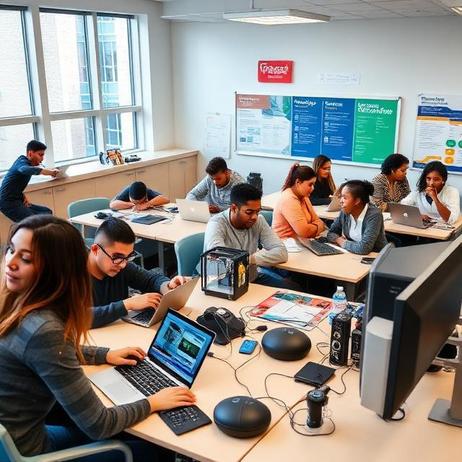
Community colleges have long served as an affordable, flexible gateway to higher education. In 2026, however, the conversation is shifting. Rapid technological change, employer partnerships, expanded transfer agreements, and new funding models are redefining expectations.
The Future of Community College: What It Means for Parents and Students is no longer simply about cost savings. It is about access to high-demand careers, stackable credentials, hybrid learning models, and a more direct connection between education and employment.
For families evaluating postsecondary options, understanding these changes is essential. Community colleges are evolving into agile workforce hubs, transfer pipelines, and lifelong learning centers, offering new opportunities and new considerations.
Enrollment Trends and the Post-Pandemic Reset
Community colleges experienced significant enrollment declines between 2020 and 2022. Since then, stabilization has occurred, particularly in career and technical education programs.
According to the National Center for Education Statistics, community colleges continue to serve millions of students annually, representing a substantial share of undergraduates nationwide. In 2026, growth areas include:
Healthcare and allied health programs
Advanced manufacturing and skilled trades
Information technology and cybersecurity
Early childhood and teacher preparation programs
Parents should note that enrollment rebounds have been strongest in career-focused programs tied to regional workforce needs. This signals a more employment-aligned future.
Workforce Alignment Is Driving the Model
One of the most important developments in The Future of Community College: What It Means for Parents and Students is the deepening partnership between colleges and employers.
Community colleges are increasingly:
Designing curricula in collaboration with local industries
Offering paid apprenticeships and internships
Creating short-term certificate programs aligned with job openings
Launching industry-recognized credential pathways
Federal workforce investments and state-level initiatives have accelerated this shift. For example, workforce training funding through the U.S. Department of Labor has supported expanded apprenticeship programs tied to community colleges.
For students, this means faster entry into the workforce. For parents, it means clearer return on investment.
What This Looks Like in Practice
In 2026, a typical student might:
Earn a 12-month cybersecurity certificate
Secure employment with a regional employer
Stack that credential into an associate degree
Later transfer to a bachelor’s program online
This stackable model is becoming standard practice.
The Rise of Stackable Credentials
Traditional two-year associate degrees remain central, but short-term credentials are expanding rapidly.
According to research from the American Association of Community Colleges, colleges are increasingly structuring programs to allow:
Certificates that count toward associate degrees
Associate degrees that articulate to bachelor’s programs
Microcredentials aligned with employer skill needs
This layered approach provides flexibility for students who may need to pause and resume their education due to financial or family responsibilities.
For parents, the key takeaway is this: education is becoming modular. Students can build credentials step by step rather than committing upfront to a four-year degree.
Transfer Pathways Are Becoming More Structured
Historically, one challenge with community colleges was credit transfer uncertainty. That landscape is improving significantly.
Many states now operate guided transfer pathways or guaranteed admission agreements with public universities. Resources such as College Navigator allow families to compare transfer rates, program offerings, and institutional data.
Improvements in 2026 include:
Statewide articulation agreements
Common course numbering systems
Dual-admission programs
Reverse transfer policies that award associate degrees after transfer
For academically focused students, community college is increasingly a strategic starting point rather than a fallback option.
Comparison: Then vs. Now
| Feature | Past Model | 2026 Model |
|---|---|---|
| Transfer Clarity | Often inconsistent | Structured pathways |
| Employer Input | Limited | Integrated into program design |
| Credential Options | Primarily associate degrees | Certificates, microcredentials, degrees |
| Learning Format | Primarily in-person | Hybrid and online options |
Hybrid and Flexible Learning Is Here to Stay
The rapid expansion of online learning during the early 2020s permanently altered instructional delivery.
Today’s community colleges commonly offer:
Hybrid technical programs
Evening and weekend schedules
Accelerated eight-week terms
Competency-based education options
The U.S. Department of Education continues to monitor and regulate distance education quality standards through its higher education oversight role at www.ed.gov.
For working adults and recent high school graduates balancing responsibilities, flexibility is a defining feature of the future model.
Affordability Remains a Central Advantage
Even as innovation expands, cost remains a primary reason families choose community colleges.
According to federal data, average tuition at public two-year institutions remains significantly lower than at four-year public universities. In addition:
Many states now offer tuition-free community college programs for eligible students
Dual-enrollment programs allow high school students to earn college credit at reduced cost
Federal Pell Grant expansions have improved access for low-income students
Parents concerned about student debt should view community colleges as a debt-minimization strategy.
However, families must still account for:
Transportation costs
Textbooks and materials
Reduced campus housing availability
Potential extended time to degree if part-time enrollment is necessary
Affordability is real, but financial planning is still required.
Technology Integration and Career Readiness
In 2026, community colleges are investing heavily in:
Simulation labs for healthcare training
Advanced manufacturing equipment
AI-enhanced tutoring systems
Virtual reality training modules
These investments reflect employer demand for job-ready graduates.
Students are no longer just earning credits. They are building portfolios, certifications, and practical experience.
Parents should ask prospective colleges:
What industry certifications are embedded in programs?
What percentage of graduates secure employment within six months?
What internship or apprenticeship opportunities exist?
The answers to these questions matter more than ever.
Serving a Broader Student Population
Community colleges have always served diverse learners. In 2026, that mission has expanded further.
Student populations increasingly include:
Recent high school graduates
Adult learners returning for career changes
First-generation college students
Military-affiliated students
Immigrant and English language learners
Support services have grown accordingly, including:
Expanded advising and coaching
Mental health services
Career counseling integrated into academic planning
Childcare partnerships in some regions
For parents of traditional-age students, this diversity can be an asset. Students are exposed to peers with varied life experiences and professional goals.
The Role of Community Colleges in Economic Mobility
Community colleges are central to regional economic development strategies.
State governments frequently rely on two-year institutions to:
Retrain displaced workers
Support emerging industries
Address local labor shortages
This economic integration strengthens job pipelines but also requires colleges to adapt quickly to changing labor market needs.
In considering The Future of Community College: What It Means for Parents and Students, families should recognize that institutional offerings may evolve rapidly. New programs can launch within a year, while outdated programs may phase out.
Staying informed is essential.
Key Questions for Families in 2026
When evaluating a community college, parents and students should consider:
Are there guaranteed transfer agreements with state universities?
What is the graduation rate for the specific program of interest?
What industry credentials are embedded?
Are internships or apprenticeships required or optional?
What academic advising support is provided?
Making decisions based on program-level data, not just institutional reputation, is increasingly important.
Challenges on the Horizon
While the outlook is promising, challenges remain:
Funding variability at the state level
Enrollment volatility tied to economic cycles
Competition from online private providers
Pressure to maintain academic quality amid rapid innovation
Parents should look for institutions with strong accreditation standing, transparent outcome reporting, and stable leadership.
Conclusion: A Strategic, Not Secondary, Choice
The Future of Community College: What It Means for Parents and Students is about strategy, flexibility, and opportunity.
Community colleges in 2026 are no longer perceived merely as lower-cost alternatives. They are:
Workforce accelerators
Transfer launchpads
Adult retraining centers
Innovation hubs for regional economies
For families focused on value, adaptability, and career alignment, community colleges deserve serious consideration.
As higher education continues to evolve, the two-year sector stands at the center of change, offering pathways that are practical, affordable, and increasingly aligned with the demands of a modern workforce.
In 2026, understanding The Future of Community College: What It Means for Parents and Students means recognizing that community colleges are evolving rapidly, and for many families, they represent one of the most strategic educational investments available.