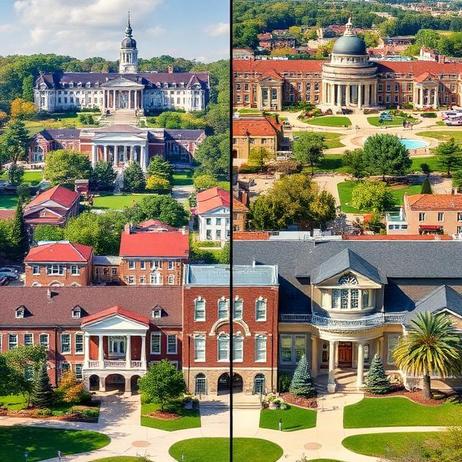
When comparing community college vs university, families often focus first on cost. But in 2026, the differences extend well beyond tuition. Academic structure, transfer pathways, campus experience, career preparation, and long-term flexibility all play important roles in choosing the right postsecondary option.
Community colleges now serve more than 10 million students nationwide, according to the National Center for Education Statistics, and they have become central to workforce development, transfer pipelines, and adult education. Universities, meanwhile, continue to offer broader research opportunities, residential experiences, and advanced degree pathways.
Understanding how these two systems differ, and how they increasingly overlap, can help students make a strategic, financially sound decision.
What Is a Community College?
Community colleges are public two-year institutions that primarily offer:
Associate degrees, such as Associate of Arts or Associate of Science
Career and technical certificates
Workforce development programs
Transfer pathways to four-year universities
These institutions emphasize accessibility. Open or broad admissions policies allow students from diverse academic backgrounds to enroll. Many students attend part time, work while enrolled, or return to school later in life.
Community colleges also play a major role in transfer education. If you are considering this route, our guide on How to Transfer from Community College to University explains articulation agreements and transfer strategies in detail.
What Is a University?
Universities are four-year institutions that award:
Bachelor’s degrees
Master’s degrees
Doctoral degrees
They typically have more selective admissions requirements and offer a broader range of majors, research facilities, and campus-based extracurricular experiences.
Universities may be public or private. Public universities are often funded in part by state governments, while private institutions rely more heavily on tuition and endowments.
The key distinction in the community college vs university debate lies in structure and scope: community colleges focus on two-year education and workforce access, while universities provide four-year degrees and advanced academic pathways.
Cost Comparison in 2026
Cost remains one of the most significant differences.
According to the College Board, average 2025–2026 published tuition and fees are approximately:
Public two-year in-district: about $4,000 per year
Public four-year in-state: about $11,000 per year
Public four-year out-of-state: about $29,000 per year
These figures do not include housing, meal plans, transportation, or additional fees.
Why Community Colleges Cost Less
Community colleges are generally less expensive because:
They receive local and state funding
They do not typically offer extensive residential facilities
They have fewer research infrastructure costs
Students often commute from home
For many families, starting at a community college can reduce total bachelor’s degree costs by tens of thousands of dollars.
Students interested in affordability strategies may also find our article on How to Pay for Community College helpful.
Admissions Requirements
Community College Admissions
Most community colleges have open admissions policies. A high school diploma or GED is typically sufficient. Placement exams may determine course level but do not usually determine acceptance.
This accessibility makes community colleges ideal for:
Students who need academic skill development
Adults returning to education
Career changers
Students seeking a lower-risk academic start
University Admissions
Universities generally require:
High school transcripts
GPA benchmarks
Standardized test scores, though many remain test-optional in 2026
Application essays
Letters of recommendation
Selective universities may admit fewer than 50 percent of applicants.
The admissions gap is one of the clearest distinctions in the community college vs university comparison.
Academic Structure and Class Experience
| Feature | Community College | University |
|---|---|---|
| Degree Length | 2 years | 4 years |
| Class Size | Often smaller | Often larger, especially in introductory courses |
| Faculty Focus | Teaching-centered | Teaching and research |
| Research Opportunities | Limited | Extensive at many institutions |
| Schedule Flexibility | High | Moderate |
Community colleges often provide smaller class sizes and direct faculty interaction. Professors are typically focused on teaching rather than research.
Universities may offer more specialized courses, advanced labs, and undergraduate research opportunities. For students pursuing competitive graduate programs, early exposure to research can be valuable.
Campus Life and Student Experience
Another major difference between community college vs university is the campus environment.
Community College Campus Life
Community colleges are primarily commuter institutions. Students often:
Live at home
Work part time or full time
Attend classes during flexible hours
While many community colleges offer student organizations and activities, the residential campus experience is usually limited.
University Campus Life
Universities often provide:
On-campus housing
Division I, II, or III athletics
Greek life
Research labs
Study abroad programs
For students seeking a traditional residential college experience, universities may provide more extensive options.
However, for students balancing work and family responsibilities, community colleges often offer greater flexibility.
Career Preparation and Workforce Outcomes
In 2026, workforce alignment has become a defining feature of community colleges.
Many offer programs in:
Health sciences
Information technology
Skilled trades
Advanced manufacturing
Cybersecurity
According to the U.S. Bureau of Labor Statistics, many associate degree careers in healthcare and technical fields provide strong median wages and steady job growth.
Universities, on the other hand, prepare students for:
Professional careers requiring bachelor’s degrees
Graduate school
Research-intensive industries
Academic careers
The right choice depends heavily on career goals. For example:
A student pursuing nursing may begin at a community college for an ADN program.
A student planning to attend medical school will eventually need a bachelor’s degree from a four-year institution.
Transfer Pathways: The Best of Both Worlds
One of the most significant developments in 2026 is the strengthening of transfer agreements between community colleges and state universities.
Many states now offer structured “2+2” programs that allow students to:
Complete general education at a community college
Transfer as juniors to a public university
Graduate with a bachelor’s degree
The U.S. Department of Education has supported initiatives that improve credit transfer transparency and student mobility.
For students concerned about cost but interested in a university degree, this pathway often offers the best balance.
Student Demographics and Flexibility
Community colleges enroll a diverse student population, including:
First-generation college students
Working adults
Military veterans
Parents
Universities traditionally enroll more recent high school graduates, though adult learner populations are growing.
If flexibility and local access are priorities, community colleges may be better aligned. If immersion and long-term campus integration are important, universities may be preferable.
Financial Aid Availability
Both community colleges and universities participate in federal financial aid programs through the Federal Student Aid office.
Students at both types of institutions may qualify for:
Pell Grants
Federal student loans
State grants
Institutional scholarships
However, because tuition is lower at community colleges, students often graduate with significantly less debt.
Community College vs University: Which Is Right for You?
There is no universal answer. Instead, families should consider the following questions:
What is the student’s academic readiness?
What is the long-term career goal?
What is the family’s financial situation?
Is the student seeking a residential experience?
Does the student benefit from smaller class sizes?
In 2026, the distinction between community college vs university is less about prestige and more about fit, flexibility, and long-term planning.
Many students now blend both systems strategically.
Frequently Asked Questions
Is community college easier than university?
Community colleges may offer smaller classes and more individualized support, but academic standards remain rigorous. The level of difficulty depends on the program and course.
Can you transfer all credits from community college?
Not always. Transfer depends on articulation agreements and course equivalencies. Students should work closely with advisors to ensure credits align with university requirements.
Do employers value community college degrees?
Yes, particularly in technical and workforce-driven fields. Employers often value the practical training and certifications community colleges provide.
Is starting at community college a smart financial strategy?
For many families, yes. Beginning at a community college can substantially reduce overall bachelor’s degree costs while preserving transfer opportunities.
Final Thoughts
The conversation around community college vs university has evolved significantly. Community colleges are no longer viewed simply as backup options. They are central to workforce development, transfer mobility, and educational access.
Universities continue to offer expansive academic resources, research opportunities, and residential campus experiences.
The most successful students in 2026 are not choosing based on perception. They are choosing based on goals, finances, academic readiness, and long-term plans.
Understanding the real differences between community college vs university empowers families to make informed, confident decisions that align with both personal and professional aspirations.